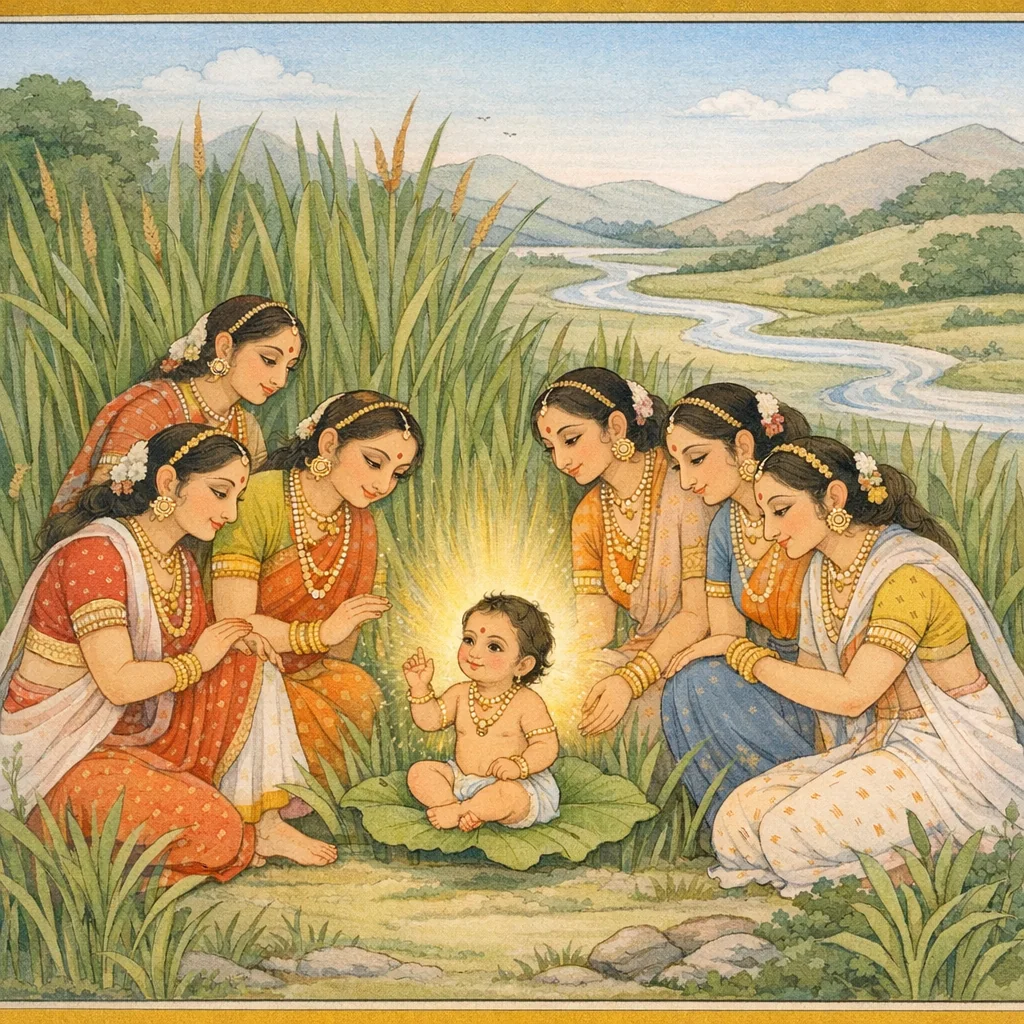
Adhyaya 31: The Birth and Consecration of Skanda (Kartikeya) at Kurukshetra
स्कन्द-कार्त्तिकेय-प्रादुर्भावः (Skanda-Kārttikeya-Prādurbhāvaḥ)
Consecration at Kurukshetra
In this Adhyāya, the Pulastya–Nārada dialogue frames a syncretic theology in which Śaiva and Vaiṣṇava agencies cooperate to manifest and enthrone Skanda. The narrative begins with Agni’s ingestion of Śiva’s discharged tejas/śukra and his inability to bear it, leading to its transfer to the river-goddess Kuṭilā (a Mahāpagā), and—by Brahmā’s instruction—its deposition in the vast Śaravaṇa near Udaya-giri. After a prolonged gestation, the child appears radiant, is discovered and nursed by the six Kṛttikās, and becomes Ṣaṇmukha through a yogic, multi-form self-disclosure that apportions filial relations among Śiva, Umā, Agni, Kuṭilā, and the Śaravaṇa itself. The chapter culminates in a public abhiṣeka at Kurukṣetra on the Sarasvatī, where gods, tīrthas, and rivers contribute gaṇas, mothers (mātṛs), mounts (mayūra), and iconographic regalia (śakti, daṇḍa, kamaṇḍalu, mālā, patākā), sanctifying the landscape while establishing Skanda as senāpati for the defeat of Tāraka and the mahiṣa-demon.
Divine Beings
Sacred Geography
Mortal & Asura Figures
Key Content Points
- Pulastya narrates to Nārada how Śiva’s tejas, first borne by Agni and then entrusted to the river-goddess Kuṭilā, is finally deposited in the Śaravaṇa by Brahmā’s directive, producing the divine child.
- Skanda’s identity is articulated through syncretic, multi-parentage and iconographic naming: Kārttikeya (of the Kṛttikās), Skanda (Gaurīputra), Guha (Śiva’s son), Māhāsena (Agni’s son), and Śāradvata (son of the Śaravaṇa), culminating in the epithet Ṣaṇmukha.
- Topographical sanctification peaks at Kurukṣetra–Sarasvatī: a grand abhiṣeka and investiture as senāpati, with extensive catalogues of gaṇas and mātṛs donated by devas, tīrthas, and rivers, and the bestowal of the peacock mount and martial insignia.
Shlokas in Adhyaya 31
Verse 10
रोमश्मश्व्रक्षिकेशाद्याः सर्वे जाता हिरण्मयाः हिरण्यरेता लोकेषु तेन गीतश्च पावकः
“The hair of the body, the beard, the eyes, the hair of the head, and the rest—all became golden. Because his semen/seed was golden in the worlds, therefore the Fire (Pāvaka) is celebrated as ‘Hiraṇyaretas’ (the one of golden seed).”
Verse tāvuvāca harirdevo gaccha taṃ tripurāntakam sa yadā vakṣyati deveśastatkurudhvamasaṃśayam
तच्छ्रुत्वा भगवानाह गच्छ त्वमुदयं गिरिम् तत्रास्ति योजनशतं रौद्रं शरवणं महत्
31
Verse 17
सा श्रुत्वा ब्रह्मणो वाक्यं रूपिणी गिरिमागता आगत्य गर्भं तत्याज सुखेनैवाद्रिनन्दिनी
“Having heard Brahmā’s words, that fair-formed one went to the mountain; and, having arrived, the mountain’s daughter cast off (deposited) the embryo with ease.”
Verse 20
ततो दशसु पूर्णेषु शरद्दशशतेष्वथ बालार्कदीप्तिः संजातो बालः कमललोचनः
Then, when ten hundred autumns had been completed, a child arose, radiant like the rising sun—an infant with lotus-like eyes.
Verse 21
उत्तानशायी भगवान् दिव्ये शरवणे स्थितः मुखे ऽङ्गुष्ठं समाक्षिप्य रुरोद घनराडिव
The Blessed Lord lay on his back in the divine Śaravaṇa; placing his thumb into his mouth, he cried like the rumbling of a cloud.
Verse 27
स तद्वचनमाकर्ण्य अजानंस्तं हरात्मजम् प्रोवाच पुत्रं देवेश न वेद्मि कतमो गुहः
Hearing those words, he—being unaware regarding that son of Hara (Śiva)—said (in reply): ‘O Lord of the gods, I do not know which one is Guha.’
Verse 28
तं प्राह भगवान् यत्तु तेजः पीतं पुरा त्वया त्रैयम्बलं त्रिलोकेश जातः शरवणे शिशुः
The Blessed Lord said to him: “That fiery energy which you once drank—(that) tri-ambala (threefold/three-mothered) potency—O Lord of the three worlds, has become a child, born in the Śaravana (the reed-thicket).”
Verse 29
श्रुत्वा पितामहवचः पावकस्त्वरितो ऽभ्यगात् वेगिनं मेषमारुह्य कुटिला तं ददर्श ह
Hearing the words of the Grandfather (Pitāmaha), Pāvaka (Agni) hurriedly went forth; mounting a swift ram, Kuṭilā saw him (as he passed).
Verse 31
साब्रवीत् तनयो मह्यं ममेत्याह च पावकः विवदन्तौ ददर्साथ स्वेच्छाचारी जनार्दनः
She said, “The son is mine.” And Pāvaka (Fire) also said, “(He is) mine.” Then Janārdana, who moves according to his own will, saw the two of them disputing.
Verse O Pitāmaha
तौ पप्रच्छ किमर्थं वा विवादमिह चक्रथः तावूचतुः वुत्रहेतो रुद्रशुक्रोद्भवाय हि
He asked them, “For what reason have you made this dispute here?” The two replied, “It is on account of Vṛtra—indeed, for the one born from Rudra and Śukra.”
Verse ["Brahmā"]
इत्युक्तौ वासुदेवेVamana Purana
Tirtha Mahima / Mythic Etiology
Verse 37
बाढमित्येव भगवान् समुत्तस्थौ वृषध्वजः सहोमया कुटिलया पावकेन च धीमता
Saying, “So be it,” the Blessed Lord—he whose banner bears the bull—rose up, together with Umā, with Kuṭilā, and with the wise Fire (Pāvaka).
Verse 38
संप्राप्तास्ते शरवणं हराग्निकुटिलाम्बिकाः ददृशुः शिशुकं तं च कृत्तिकोत्सङ्गशायिनम्
They—Hara, Agni, Kuṭilā, and Ambikā—having reached Śaravaṇa, beheld that child lying in the lap of the Kṛttikās.
Verse None (Śiva as Śarva; Skanda narrative)
ततः स बालकस्तेषां मत्वा चिन्तितमादरात् योगी चतुर्मूर्तिरभूत् षण्मुखः स शिशुस्त्वपि
Then that boy, discerning their thought with reverence, became a yogin; he assumed a fourfold form, and that very infant also became six-faced (Ṣaṇmukha).
Verse 40
कुमारः शङ्करमगाद् विशाखो गौरिमागमत् कुटिलामगमच्छाखो महासेनो ऽग्निमभ्ययात्
Kumāra went to Śaṅkara; Viśākha approached Gaurī; Śākha went to Kuṭilā; and Mahāsena went to Agni.
Verse the six divine Kṛttikās
ततः प्रीतियुतो रुद्र उमा च कुटिला तथा पावकश्चापि देवेशः परां मुदमवाप च
Then Rudra, filled with affection, and Umā, and likewise Kuṭilā; and Pāvaka (Agni) too—the lord of the gods—attained supreme joy.
Verse 44
स्कन्द इत्येव विख्यातो गौरीपुत्रो भवत्वसौ गुह इत्येव नाम्ना च ममासौ तनयः स्मृतः
“Let him be renowned precisely as ‘Skanda’; let him be Gaurī’s son. And by the name ‘Guha’ as well, he is remembered as my son.”
Verse 45
माहासेन इति ख्यातो हुताशस्यास्तु पुत्रकः शारद्वत इति ख्यातः सुतः शरवणस्य च
“He is famed as ‘Māhāsena’; let him be the son of Hutāśa (Fire). He is famed as ‘Śāradvata’—the son of the Śaravaṇa (reed-thicket) as well.”
Verse 46
एवमेव महायोगी पृथिव्यां ख्यातिमेष्यति षडास्यत्वान् महाबाहुः षण्मुखो नाम गीयते
“Just so, this great yogin will become renowned upon the earth. Because he possesses six faces, that mighty-armed one is sung of by the name ‘Ṣaṇmukha’ (Six-faced).”
Verse 47
इत्येवमुक्त्वा भगवान् शूलपाणिः पितामहम् सस्मार दैवतैः सार्द्ध ते ऽप्याजग्मुस्त्वरान्विताः
“Having spoken thus, the Blessed Lord, the wielder of the trident (Śiva), called to mind Pitāmaha (Brahmā) together with the gods; and they too came, swiftly and without delay.”
Verse 48
प्रणिपत्य च कामारिमुमां च गिरिनन्दिनीम् दृष्ट्वा हुताशनं प्रीत्या कुटिलां कृत्तिकास्तथा
“And having bowed down to Kāmāri (Śiva) and to Umā, the daughter of the Mountain (Pārvatī), and upon seeing Hutāśana (Agni), the Kṛttikās too—Kuṭilā and the others—(approached) with affection.”
Verse 49
ददृशुर्बालमत्युग्रं षण्मुखं सूर्यसंनिभम् मुष्णन्तमिव चक्षुंषि तेजसा स्वेन देवताः
The gods beheld a child—exceedingly fierce—Ṣaṇmukha, radiant like the sun, whose own splendor seemed, as it were, to steal away their sight.
Verse 50
कौतुकाभिवृताः सर्वे एवमूचुः सुरोत्तमाः देवकार्यं त्वया देव कृतं देव्याग्निना तथा
All the foremost of the gods, filled with wonder, spoke thus: “O god, the gods’ work has been accomplished by you—so too by the Goddess and by Agni.”
Verse 52
सेनायाः पतिरस्त्वेष देवगन्धर्वकिंनराः महिषं घातयत्वेष तारकं च सुदारुणम्
“Let this one be the commander of the army, O Devas, Gandharvas, and Kiṃnaras. Let him slay Mahiṣa and also the exceedingly dreadful Tāraka.”
Verse 53
बाढमित्यब्रवीच्छर्वः समुत्तस्थुः सुरास्ततः कुमारसहिता जग्मुः कुरुक्षेत्रं महाफलम्
“‘So be it,’ said Śarva (Śiva). Then the gods rose up, and together with Kumāra they went to Kurukṣetra, the place of great merit (great fruit).”
Verse 55
ततो ऽम्बुना सप्तसमुद्रवाहिनीनदीजलेनापि महाफलेन वरौषधीभिश्च सहस्रमूर्त्तिभिस्तदाभ्यषिञ्चन् गुमच्युताद्याः
Then they consecrated him with water—(water) brought by rivers that flow into the seven oceans—along with great fruits and excellent medicinal herbs; and at that time, the hosts beginning with the Gaṇas (attendants of Śiva) performed the anointing in manifold forms.
Verse 56
अभिषिञ्चति सेनान्यां कुमारे दिव्यरूपिणि जगुर्गन्धर्वपतयो ननृतुश्चाप्सरोगणाः
As the divine-formed Kumāra was being consecrated as commander of the army, the lords of the Gandharvas sang, and the companies of Apsarases danced.
Verse 57
अभिषिक्तं कुमारं च गिरिपुत्री निरीक्ष्य हि स्नेहादुत्सङ्गगं स्कन्दं मूर्ध्न्यजिघ्रन्मुर्हुर्मुहुः
And seeing Kumāra consecrated, the Daughter of the Mountain (Pārvatī), out of affection, took Skanda onto her lap and repeatedly smelled (kissed) him on the head again and again.
Verse 58
जिघ्रती कार्त्तिकेयस्य अभिषेकार्द्रमाननम् भात्यद्रिजा यथेन्द्रस्य देवमातादितिः पुरा
As Pārvatī (the daughter of the Mountain) smelled the face of Kārttikeya, still moist from the consecratory bathing, she shone forth—just as, in ancient times, Aditi, the mother of the gods, (shone) upon (beholding) Indra.
Verse 59
तदाभिषिक्तं तनयं दृष्ट्वा शर्वो मुदं ययौ पावकः कृत्तिकाश्चैव कुटिला च यशस्विनी
Then, seeing his son consecrated, Śarva (Śiva) became joyful; and so did Pāvaka (Agni), the Kṛttikās, and Kuṭilā, the illustrious one.
Verse 60
ततो ऽभिषिक्तास्य हरः सेनापत्ये गुहस्य तु प्रमथांश्चतुरः प्रदाच्छक्रतुल्यपराक्रमान्
Thereupon, after (Skanda) had been consecrated, Hara (Śiva), for the generalship of Guhā (Skanda), granted four Pramathas—possessed of prowess equal to Indra’s.
Verse 61
घण्टाकर्ण लोहिताक्षं नन्दिसेनं च दारुणम् चतुर्थं बलिनां मुख्यं ख्यातं कुमुदमालिनम्
“(They named) Ghaṇṭākarṇa, Lohitākṣa, and Nandisena—also the fierce (gaṇa) Dāruṇa; and as the fourth, the foremost among the powerful ones, renowned as Kumudamālin.”
Verse 62
हरदत्तान् गणान् दृष्ट्वा देवाः स्कन्दस्य नारद प्रददुः प्रमथान् स्वान् स्वान् सर्वे ब्रह्मपुरोगमाः
“O Nārada, seeing the gaṇas bestowed by Hara (Śiva), the gods—Brahmā at their head—each gave over his own pramathas (attendant-spirits) to Skanda.”
Verse 63
स्थाणुं ब्रह्म गणं प्रादाद् विष्णुः प्रादाद् गणत्रयम् संक्रमं विक्रमं चैव तृतीयं च पराक्रमम्
“Brahmā gave (a gaṇa named) Sthāṇu; and Viṣṇu gave a triad of gaṇas—Saṃkrama, Vikrama, and as the third, Parākrama.”
Verse 64
उत्केसं पङ्कजं शक्रो रविर्दण्डकपिङ्गलौ चन्द्रो मणिं वसुमणिमश्विनौ वत्सनन्दिनौ
Indra (Śakra) bestowed the epithet “Utkesa” and “Paṅkaja”; the Sun (Ravi) bestowed “Daṇḍaka” and “Piṅgala”; the Moon (Candra) bestowed “Maṇi”; the Vasus bestowed “Vasumaṇi”; and the Aśvins bestowed “Vatsanandinā”.
Verse 65
ज्योतिर्हुताशनः प्रादाज्जवलज्जिह्वं तथापरम् कुन्दं मुकुन्दं कुसुमं त्रीन् धातानुचरान् ददौ
Agni, the eater of oblations (Hutāśana), bestowed the epithet “Jyotis” and also “Jvalajjihva”; and (another deity) bestowed “Kunda,” “Mukunda,” and “Kusuma”—three attendants of Dhātṛ (the Creator).
Verse 71
यमः प्रमाथमुन्माथं कालसेनं महामुखम् तालपत्रं नाडिजङ्घं षडेवानुचरान् ददौ
Yama gave six divine attendants: the Pramatha Unmātha, Kālasena, Mahāmukha, Tālapātra, and Nāḍijaṅgha (together making six attendants as stated).
Verse 72
सुप्रभं च सुकर्माणं ददौ धाता गणेश्वरौ सुव्रतं सत्यसन्धं च मित्रः प्रदाद द्विजोत्तम
Dhātā gave two Gaṇeśvaras—Suprabha and Sukarmā. And Mitra bestowed (two more): Suvrata and Satyasandha, O best of twice-born.
Verse 73
अनन्तः शङ्कुपीठश्च निकुम्भः कुमुदो ऽम्बुजः एकाक्षः कुनटी चक्षुः किरीटी कलशोदरः
“(They are:) Ananta, Śaṅkupīṭha, Nikumbha, Kumuda, Ambuja, Ekākṣa, Kunaṭī, Cakṣu, Kirīṭin, and Kalaśodara.”
Verse 74
सूचीवक्त्रः कोकनदः प्रहासः प्रियको ऽच्युतः गणाः पञ्चदशैते हि यक्षैर्दत्ता गुहस्य तु
“(Also:) Sūcīvaktra, Kokanada, Prahāsa, Priyaka, and Acyuta. These fifteen are indeed gaṇas given to Guha by the Yakṣas.”
Verse 76
कालिन्द्याः कालकन्दश्च नर्मदाया रणोत्कटः गोदावर्याः सिद्धयात्रस्तमसायाद्रिकम्पकः 31.75 सहस्रबाहुः सीताया वञ्जूलायाः सितोदरः मन्दाकिन्यास्तथा नन्दो विपाशायाः प्रियङ्करः
“For the Kālin̄dī (Yamunā) (there is) Kālakanda; for the Narmadā, Raṇotkaṭa; for the Godāvarī, Siddhayātra; for the Tamasā, Adrikampaka. (Likewise:) for the Sītā, Sahasrabāhu; for the Vañjūlā, Sitodara; for the Mandākinī, Nanda; and for the Vipāśā, Priyaṅkara.”
Verse 77
ऐरावत्याश्चतुर्द्दष्ट्रः षोडशाक्षो वितस्तया मार्जारं सौशिकी प्रादात् क्रथक्रौञ्चौ च गौतमी
From Airāvatī (arose) Caturdaṣṭra; from Vitastā, Ṣoḍaśākṣa. Sauśikī produced Mārjāra; and Gautamī produced Kratha and Krauñca.
Verse 78
बाहुदा शतसीर्षं च वाहा गोनन्दनन्दिकौ भीमं भीमरथी प्रादाद् वेगारिं सरयूर्ददौ
Bāhudā produced Śataśīrṣa; Vāhā produced Go, Nanda, and Nandika. Bhīmarathī produced Bhīma; and Sarayū produced Vegāri.
Verse 79
अष्टबाहुं ददौ काशी सुबाहुमपि गण्डकी महानदी चित्रदेवं चित्रा चित्ररथं ददौ
Kāśī produced Aṣṭabāhu; Gaṇḍakī also produced Subāhu. Mahānadī produced Citradeva; and Citrā produced Citraratha.
Verse 80
कुहूः कुवलयं प्रादान्मधुवर्णं मधूदका जम्बूकं धूतपापा च वेणा श्वेताननं ददौ
Kuhū bestowed (the sacred place called) Kuvalaya; Madhūdakā (bestowed) Madhuvarṇa; Dhūtapāpā (bestowed) Jambūka; and Veṇā bestowed Śvetānana.
Verse 81
श्रुतवर्म च पर्मासा रेवा सागरवेगिनम् प्रभावार्थं सहं प्रादात् काञ्चना कनकेक्षणम्
Śrutavarmā (bestowed) Parmāsā; Revā (bestowed) Sāgaravegin; and Kāñcanā, for the sake of (declaring) its special potency, bestowed Kanakekṣaṇa.
Verse 82
गृध्रपत्रं च विमला चारुवक्त्रं मनोहरा धूतपापा महारावं कर्णा विद्रुमसंनिभम्
Vimalā (bestowed) Gṛdhrapatra; Manoharā (bestowed) Cāruvaktra; Dhūtapāpā (bestowed) Mahārāva; and Karṇā (bestowed) Vidrumasaṃnibha.
Verse 83
सुप्रसादं सुवेणुश्च जिष्णुमेघवती ददौ यज्ञबाहुं विशाला च सरस्वत्यो ददुर्गणान्
Suprasāda and Suveṇu, and Jiṣṇu and Meghavatī, gave (him) gaṇas; and Yajñabāhu and Viśālā—(and the) Sarasvatīs—also bestowed gaṇas.
Verse 84
कुटिला तनयस्यादाद दश शक्रबलान् गणान् करालं सितकेशं च कृष्णकेशं जटाधरम्
Kuṭilā, for (her) son, took ten gaṇas of Śakra’s strength—(including) Karāla, Sitakeśa, and Kṛṣṇakeśa, the matted-haired one.
Verse 85
मेघनादं चतुर्द्दष्ट्रं विद्युजिह्वं दशाननम् सोमाप्ययनमेवोग्रं देवयाजिनमेव च
(They included) Meghanāda, Caturdaṣṭra, Vidyujihva, Daśānana; and also Somāpyayana, the fierce one (Ugra), and Devayājin as well.
Verse 86
हंसास्यं कुण्डजठरं बहुग्रीवं हयाननम् कूर्मग्रीवं च पञ्चैतान् ददुः पुत्राय कृत्तिकाः
The Kṛttikās bestowed upon their son five (forms/epithets): “Hamsa-faced,” “Pot-bellied,” “Many-necked,” “Horse-faced,” and “Tortoise-necked.”
Verse 89
चक्रतीर्थं सुचजक्राक्षं मकराश्रं गयाशिरः गणं पञ्चशिखं नाम ददौ कनखलः स्वकम्
Kanakhala, as his own (sacred allotment), bestowed/established the group (of holy places) named: Cakratīrtha; Sucakra–Akṣa; Makarāśra; Gayāśiras; and the Gaṇa called Pañcaśikha.
Verse 100
प्रादात् खटकटां चान्यां सर्वपापविमोचनः संतानिकां विकलिकां क्रमश्चत्वरवासिनीम्
He—the remover of all sins—also bestowed Khaṭakaṭā and another (of that group); (and) Saṃtānikā, Vikalikā, and Kramā, who dwells at the crossroads (or: in the fourfold junction).
Verse 101
जलेश्वरीं कुक्कुटिकां सुदामां लोहमेखलाम् वपुष्मत्युत्मुकाक्षी च कोकनामा महाशनी रौद्रा कर्कटिका तुण्डा श्वेततीर्थो ददौ त्विमाः
Śveta-tīrtha bestowed these (named sacred presences/attendants): Jaleśvarī, Kukkuṭikā, Sudāmā, Lohamekhalā, Vapuṣmatī, Utmukākṣī, Kokanāmā, Mahāśanī, Raudrā, Karkaṭikā, and Tuṇḍā.
Verse 102
एतानि भूतानि गणांश्च मातरो दृष्ट्वा महात्मा विनतातनूजः ददौ मयूरं स्वसुतं महाजवं तथारुणस्ताम्रचूडं च पुत्रम्
Seeing these beings—gaṇas and Mothers—the great one, the son of Vinatā, bestowed (as attendants): the peacock, his own very swift son; and likewise Aruṇa gave (his) son, Tāmra-cūḍa.
Verse 103
शक्ति हुताशो ऽद्रिसुता च वस्त्रं दण्डं गुरुः सा कुटिला कमण्डलुम् मालां हरिः शूलधरः पताकां कण्ठे च हारं मघवानुरस्तः
Agni (Hutāśa) gave a śakti (a spear/weapon); the daughter of the mountain gave a garment; the Guru gave a staff; that Kuṭilā (gave) a water-pot; Hari gave a garland; the bearer of the trident gave a banner; and Maghavan (Indra) gave a necklace to be worn upon the neck and chest.
Verse 104
गणैर्वृतो मातृबिरन्वयातो मयूरसंस्थो वरशक्तिपाणिः सैन्याधिपत्ये स कृतो भवेन रराज सूर्येव महावपुष्मान्
Surrounded by the Gaṇas and attended by the Mothers (Mātṛs), seated upon a peacock and holding the excellent spear (śakti) in his hand, he was appointed by Bhava (Śiva) to the command of the army; possessed of a great radiance, he shone like the Sun.
Frequently Asked Questions
The Pulastya–Nārada narration presents a syncretic theology: Śiva’s tejas generates Skanda, yet Viṣṇu (Hari/Vāsudeva) functions as arbiter in the parentage dispute (Agni vs. Kuṭilā) and directs them back to Tripurāntaka for adjudication. The final naming and filiations distribute devotional ownership—Skanda as Gaurīputra and Guha (Śiva’s son), Māhāsena (Agni’s son), Kārttikeya (Kṛttikās’ son), and Śāradvata (Śaravaṇa’s son)—modeling mutual legitimacy rather than sectarian exclusivity.
Kurukṣetra on the Sarasvatī is sanctified as the stage for Skanda’s abhiṣeka and investiture as senāpati, functioning as a topographical anchor for divine polity. The chapter further embeds tīrtha-geography through named sites (e.g., Kanakhala, Pṛthūdaka, Cakratīrtha, Somatīrtha, Indratīrtha, Nāgatīrtha, Śvetatīrtha, Saptasārasvata, Prabhāsa, Prayāga, Badarikāśrama, Kedāra, Rudramahālaya), and through river-personifications (e.g., Sarasvatī and multiple nadīs) that donate attendants and mātṛs, turning pilgrimage space into a living ritual network.
Skanda’s abhiṣeka explicitly authorizes him as senāpati of the devas, with the stated mission to destroy Tāraka and the mahiṣa-demon, and to address threats such as Krauñca. The long catalogues of gaṇas, mātṛs, mount (mayūra), and weapons/regalia function as a mythic mustering-roll, portraying divine kingship as institutional and ritually grounded rather than merely heroic.